81st Anniversary: Assessing Indonesia’s Renewable Energy Progress
Duwi Setiya Ariyanti • Author
27 August 2026

18
• 4 Minutes Read
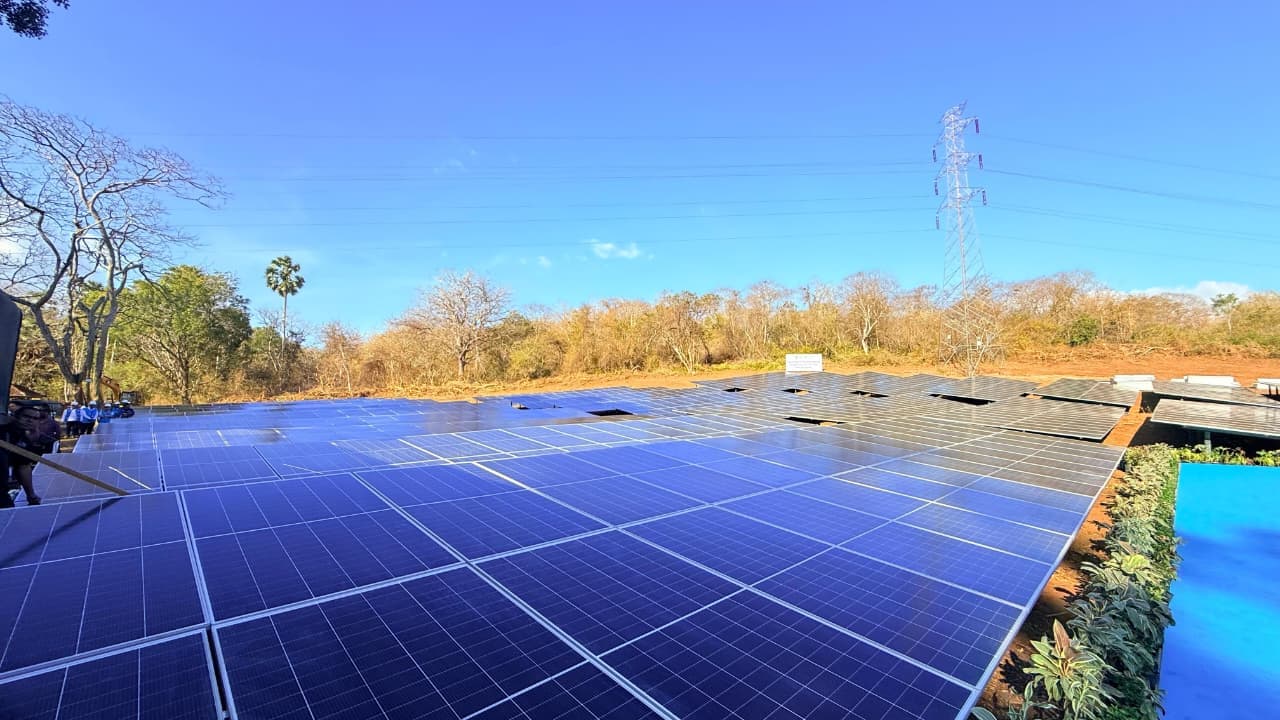
Image: Laily Rachev/BPMI Setpres
The proposal to develop 100 gigawatts (GW) of solar power capacity frequently appears in President Prabowo Subianto's speeches, including during the presentation of macroeconomic indicators for the 2027 Draft State Budget (RAPBN).
Prabowo stated that by developing 100 GW of solar power generation capacity, the country could save at least IDR 73.9 trillion annually through reduced electricity production costs. The program is also projected to result in a cumulative carbon emission reduction of up to 97 million tons of CO₂ by 2030.
This project, with an estimated investment value of approximately US$73 billion (IDR 1,140 trillion), was inaugurated in Bali on Tuesday, August 25, 2025. Targeted for completion within three years, the project is divided into four phases: an initial phase of 17 gigawatt-peak (GWp), subsequent phases of 18 GWp and 35 GWp, and a final phase of 30 GWp.
While it may sound heroic in speeches, the actual realization of the renewable energy mix remains far below the expectations set out on paper.
Expectations for an accelerated energy transition have dimmed, as solar power projects are notably absent from the General Plan for Electricity Supply (RUPTL) for the 2025–2034 period. Although touted as the "greenest" RUPTL to date, the plan still includes a combined capacity addition of 16.6 GW from coal and gas-fired power plants.
The plan still falls short of the potential
This 100 GWp solar power project should serve as a beacon of hope for a more massive energy transition. This is because, according to the Electricity Supply Business Plan (RUPTL), the planned addition of renewable energy generation capacity stands at only 42.6 GW—equivalent to 61% of the total capacity—while energy storage capacity accounts for 10.3 GW (15%), comprising pumped-storage hydropower plants and battery systems.
Of that total, solar power accounts for the largest share at 17.1 GW. This figure is followed by hydropower at 11.7 GW, wind power at 7.2 GW, geothermal at 5.2 GW, bioenergy at 0.9 GW, and nuclear power at 0.5 GW.
Despite appearing ambitious, this target remains lower than the decarbonization projections for Indonesia's energy sector under the Just Energy Transition Partnership (JETP). That commitment sets a renewable energy target of 56 GW by 2030. Consequently, the target established in the RUPTL is still insufficient to limit the global temperature rise to 1.5 degrees Celsius in line with the Paris Agreement, which requires the electricity sector to reach peak emissions before 2030.
Looking ahead to the projected figures for the end of 2025, the total national power generation capacity reaches 107.51 GW. Of this total, renewable energy capacity stands at 15.63 GW, with solar power plants (PLTS) contributing only 1.49 GW.
With a potential electricity generation capacity of 180,000 TWh per year from solar photovoltaic (PV) installations—equivalent to four times the annual electricity consumption—solar energy development should be gaining further momentum, driven by the continuing decline in solar panel costs to between US$3 and US$7 cents per kWh. Consequently, it is unsurprising that solar energy has become the cheapest energy source in the world. As a result, increasing the share of renewable energy in the energy mix should not be a difficult task.
Another driving factor is low battery costs, which are spurring the development of a domestic battery ecosystem—particularly through Battery Energy Storage Systems (BESS). This technology stores electricity generated by power plants in batteries to ensure grid reliability while managing the intermittent nature of solar power generation.
Last year, global battery prices fell by more than 30% compared to 2023 trends—the largest price drop in the last decade. In the battery market, BESS costs also fell to US$165/kWh, driving a record 169 GWh of new annual installations.
Overcoming the sluggish development of renewable energy
Unfortunately, Indonesia cannot simply capitalize on this.
A number of regulations continue to hinder the development of solar power plants. Additionally, there are extra costs arising from the 11% Value Added Tax (VAT) and shipping charges. Furthermore, as the single buyer of electricity, PLN cannot adopt the technology directly, resulting in price variations among vendors. Ultimately, the opportunity to capitalize on low battery prices cannot be utilized.
This should serve as an opportunity to strengthen domestic production capacity, making products more affordable for buyers due to potential reductions in electricity and labor costs. However, comprehensive reform is required across various areas—ranging from electricity pricing, subsidies, and financing to governance—including reforms affecting PLN.
To maintain market momentum, the government also needs to ensure the attractiveness of the 100 GW solar power project by securing economies of scale driven by high domestic and global demand. Equally important is a review of import duties, which currently favor imported components over domestically produced goods.