Electrifying Boats: Breaking Free from the Strait of Hormuz and Advancing Energy Justice for Coastal
Sekar Tri Jayanti • Author
30 May 2026

100
• 6 Minutes Read
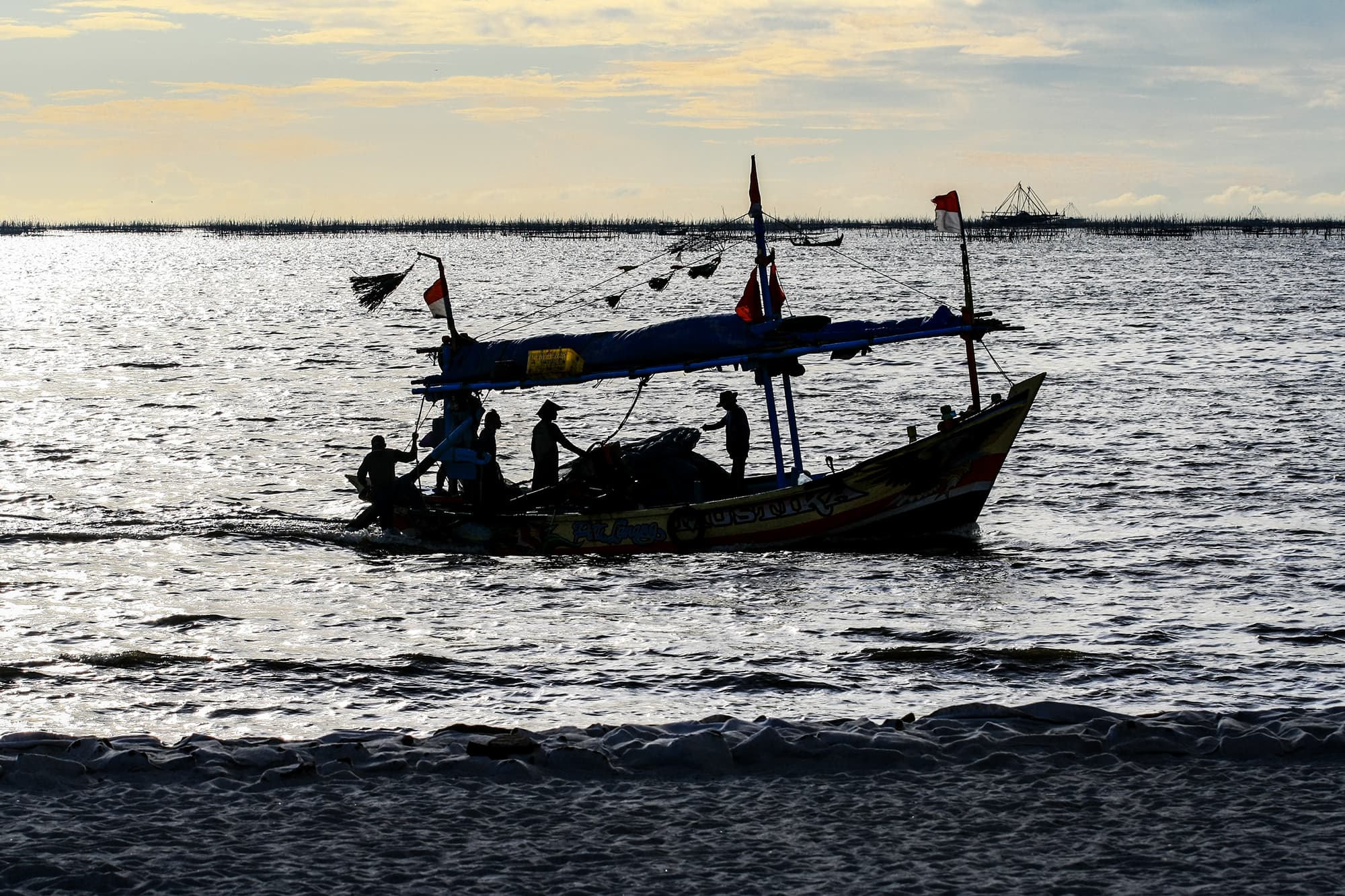
Photo credit: Myeyes.picture/Wikimedia Commons
The world is once again witnessing how fragile global energy supply chains can be. Since early 2026, tensions in the Strait of Hormuz have become more than just an international headline. They have become a real warning sign for Indonesia’s domestic energy security. This strategic waterway, which carries nearly a third of the world’s oil supply, is facing growing instability, and the effects are beginning to reach even the smallest fishing ports across the archipelago.
The impact on Indonesia’s economic stability can already be seen in measures such as restrictions on subsidized fuel purchases between April and May 2026, as well as mounting uncertainty surrounding tanker shipping routes. For traditional fishers, the situation sends a harsh message: their economic sovereignty is being held hostage by conflicts taking place thousands of kilometers away. Those who still rely on diesel-powered boats are now being forced to rethink how they operate and plan their fishing trips.
For small-scale fishers, dependence on fuel is a burden that drives them into poverty. This is because fuel costs account for as much as 60% to 70% of their total operating expenses. As a result, when supplies are disrupted by global crises, fishers are among the first to feel the consequences. The crisis may unfold in the Strait of Hormuz, but the hardship is borne by fishing communities along Indonesia’s coastlines.
While the government continues to seek ways to secure national energy reserves, that sense of “security” is not always felt in small coastal ports. Amid this uncertainty, the shift toward electric boats is no longer simply a green lifestyle choice. It is a crucial step toward freeing fishers from recurring energy crises. Now is the time for a just energy transition to move beyond mere rhetoric and start making a tangible difference to the engines of fishing boats along the coastline.
Lessons from Bali: Efficiency That Delivers
One of the most practical ways to break this cycle of dependence is through the electrification of fishing boats (E-Boats). The technology is no longer theoretical. In regions such as Bali, electric boats have already been successfully deployed through integration with existing electricity networks that support the tourism sector. In areas with more limited energy access, innovation has gone even further. Electric boats powered by standalone solar energy systems have begun operating in places such as Tunda Island, Serang Regency, Banten. These examples demonstrate that E-Boat technology is highly adaptable to different local conditions. The challenge now is ensuring that government support can help scale these solutions more broadly
Fishers who have adopted electric motors have already demonstrated their benefits. A fisher in Masamba Village, Bali, described the benefits he has directly experienced. In addition to producing no pollution, electric boats significantly reduce operating costs. A typical fishing trip previously required around IDR 100,000 worth of fuel for 10 liters of diesel. With an electric motor, charging costs are only around IDR 10,000.
Savings of up to 90% are the foundation of true economic independence. If implemented on a large scale, the government could redirect the trillions of rupiah in fuel subsidies that are currently being burned up into investments in battery technology, with the assets owned directly by fishers. Moreover, Indonesia has a surplus of domestic electricity supplied by PLN that can be productively utilized by the maritime sector, thereby reducing dependence on crude oil imports.
Facing Reality: Why Does the Transition Feel So Difficult?
At the same time, we must be honest about the realities of this transition. Electrifying fishing boats is not as simple as flipping a switch. There are real obstacles preventing the development of electric boats outside of Bali from moving at lightning speed. The first is the upfront cost. Based on PLN’s implementation of the Electrifying Marine program, although electric boats can substantially reduce operating expenses, the initial cost of electric motor and battery packages remains significantly higher than conventional gasoline-powered outboard engines. Without affordable installment plans or special “conversion subsidies” for fishers, this innovation will be out of reach for ordinary people.
The second challenge is charging infrastructure. Remote fishing ports require stronger electricity connections and battery-swapping stations to ensure fishers can operate efficiently. Equally important is the development of specialized repair and maintenance workshops in fishing villages. Without reliable local support, many fishers will understandably hesitate to move away from technologies they have used for decades.
Ironically, Indonesia is the world’s largest producer of nickel, a key component in battery manufacturing. However, much of this resource currently flows into luxury electric vehicle supply chains or export markets. Achieving energy justice means ensuring that the minerals underpinning the global energy transition are also used to empower the smallest fishing boats across the Indonesian archipelago.
Creative Financing: Turning a Burden into Capital
The essence of “just” is ensuring that the transition does not impose new burdens, but rather provides solutions. Since the challenges of financing and infrastructure are real, the government cannot simply encourage fishers to switch to electricity. It must also provide the bridge that makes the transition possible.
This requires a shift from consumption-based subsidies toward productive investment. One practical approach is a pay-as-you-save financing scheme. If fishers save between IDR 50,000 and IDR 80,000 per day after switching to electric boats, part of those savings could be used to repay battery costs without reducing their net income.
International funding mechanisms such as the Just Energy Transition Partnership (JETP) should also be channeled through fishers’ cooperatives to support the procurement of electric motors and the establishment of specialized workshops in coastal villages. This would help ensure that large-scale energy transition funding reaches local communities directly, while reducing Indonesia’s long-term dependence on imported oil.
Building Sovereignty from the Coastline
The crisis in the Strait of Hormuz should serve as a wake-up call. Indonesia cannot continue responding to geopolitical disruptions by simply searching for alternative sources of imported fuel whenever a crisis emerges. Such measures are temporary fixes that fail to address the root of the problem.
Energy justice will not be achieved through fuel substitution alone. It requires a fundamental shift in how energy resources are managed and distributed. Government institutions, private-sector actors, and civil society must work together to ensure that investments in clean energy do not remain concentrated in major urban centers, but reach even the smallest units of society. Communities must be positioned as active participants rather than passive consumers. Large-scale renewable energy investments should be directed toward building community-based energy infrastructure that strengthens local resilience.
Without local energy sovereignty, Indonesia will remain an anxious spectator on the sidelines of global trade routes, constantly waiting for the next spike in oil prices and the next sacrifice demanded of ordinary people. Only through local energy independence can we ensure that the economic lifeblood of the archipelago continues to flow, regardless of the storms that disrupt the world’s shipping lanes.
—
Sekar Tri Jayanti is a freelance writer from Sragen and a graduate of the Indonesian Literature program at Diponegoro University. To connect with the author, visit her Instagram account at @zaavioraa.