Energy, Religion, and Justice: Dimensions Often Overlooked in Indonesia's Energy Transition
Niki Alma Febriana Fauzi • Author
15 May 2026

120
• 5 Minutes Read
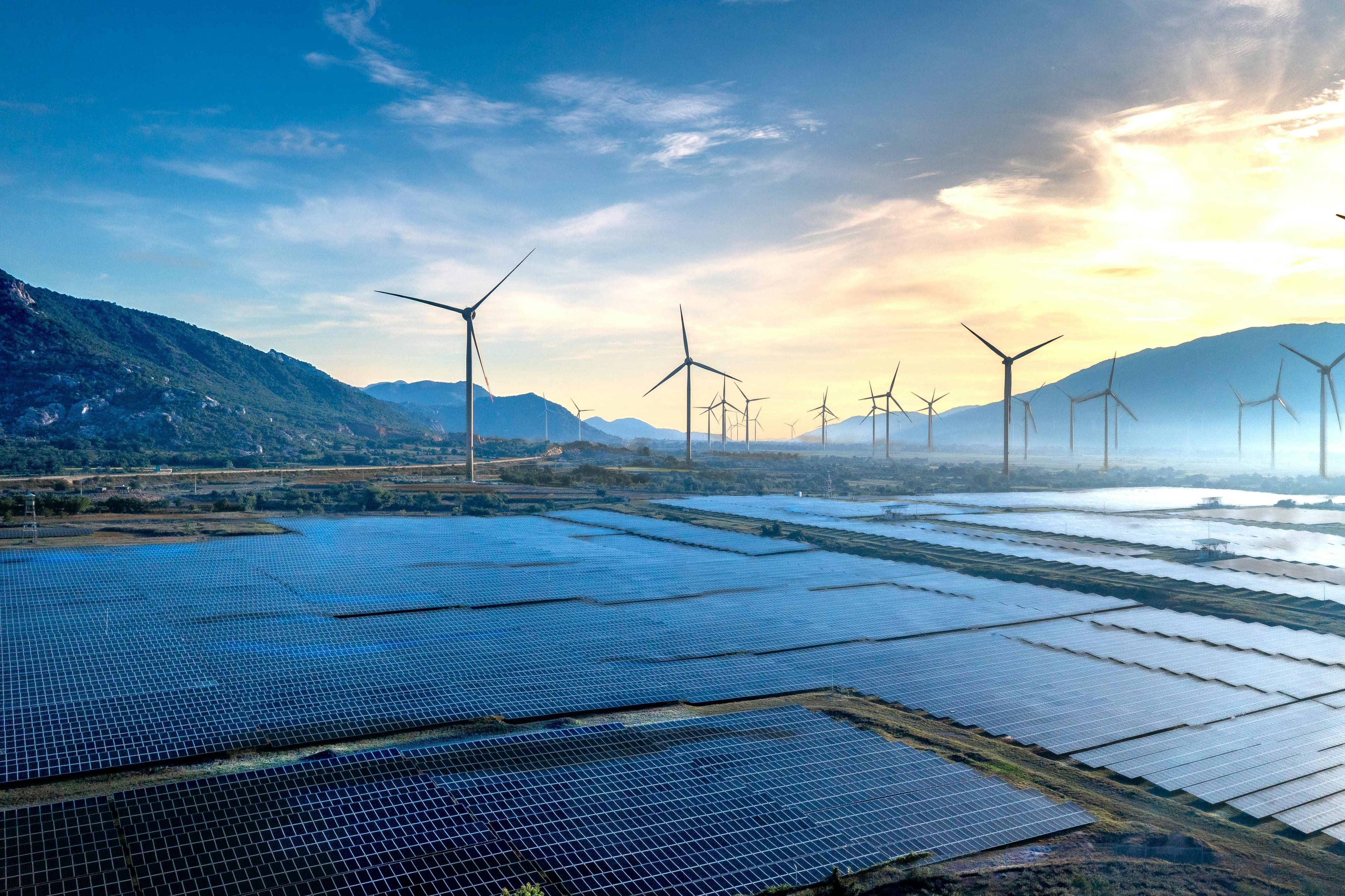
Photo Credit: Quang Nguyen Vinh/Pexels
Across different forums on Indonesia's energy transition, a basic question is seldom asked: how do religious perspectives view this issue?
As a country with the world’s largest Muslim population, Indonesia has a distinct social reality. Key decisions at the community level — ranging from the acceptance of energy projects to shifts in consumption patterns — are often shaped more by the moral influence of religious leaders than by state regulations. Overlooking this dimension effectively results in strategies that are inherently incomplete.
This gap is what the book Fikih Transisi Energi Berkeadilan, published by Suara Muhammadiyah in January 2025, attempts to fill. Rather than being purely a theological text, it reflects a rigorous process of ijtihad, building on Muhammadiyah’s longstanding tradition of producing Islamic jurisprudence on environmental ethics, agrarian issues, and disaster management.
The distinctive feature of this book lies in how it redefines fiqh: no longer as a rigid list of halal and haram rulings, but as a layered system of norms, ranging from fundamental universal values, to general principles, and finally to practical, actionable guidance.
At its most fundamental level, the book identifies five Islamic values that are directly related to energy issues. First is tawhid, which places the oneness of God as the foundation of humanity’s relationship with nature. Second is ayat, which understands the natural world as signs of God’s greatness that must be preserved. Third is amanah, referring to human responsibility as khalifah on earth.
The fourth value is adl, meaning justice, especially regarding equitable access to energy and the distribution of societal burdens. The fifth is mizan, which refers to the principle of ecological balance.
These five values are not merely theological ornaments; they form a moral framework that, when translated into policy and real-world behaviour, can drive an energy transition that is not only technically clean but also socially just.
A Transition Lacking Deliberation and Justice
The Indonesian context makes the urgency of an Islamic values-based argument even more apparent. So far, the energy transition in the country has largely been treated as a purely technical and economic agenda: how much renewable energy capacity should be built, how much subsidy should be reallocated, and how far emissions can be reduced.
Behind those figures lies a governance problem that is rarely addressed. Local communities affected by energy projects are often excluded from decision-making processes. Benefits tend to be concentrated in the hands of a few, while the environmental and social burdens fall disproportionately on those least able to bear them. According to the book, this situation reflects a failure to uphold the principles of deliberation and justice in energy governance.
The book does not stop at an abstract level. It presents concrete examples already being implemented on the ground, one of which is the Energy Charity program at Al-Muharram Mosque in Bantul, Yogyakarta. Initiated in collaboration with MOSAIC (Muslims for Shared Action on Climate Impact) and Enter Nusantara, the program uses a crowdfunding scheme based on charitable giving to finance the installation of solar panels. As a result, more than Rp85 million was raised from over 5,000 donors—sufficient to install eight solar panels, each with a capacity of 535 watts peak.
In addition, the program directly involves local residents and mosque congregants in the installation and maintenance process, ensuring that it is not only a transfer of technology, but also the development of a sense of ownership over the initiative.
Catalysing Sharia-Based Financing for the Energy Transition
The experience of the Energy Charity program demonstrates that religious instruments such as almsgiving (sadaqah) can serve as a legitimate bridge between moral values and concrete climate action.
This is where the significant potential of ZISWAF instruments—zakat, infak, sadaqah, and waqf—deserves greater attention within the context of blended finance. Traditionally, religious social funds have almost always been viewed as a source of consumptive financing. However, if managed productively and directed toward the PV solarisation of mosques and Islamic boarding schools, ZISWAF could become an inclusive community energy financing mechanism—reaching groups that have so far been excluded from conventional banking credit schemes.
The case of Al-Muharram Mosque shows that this model is more than just a conceptual idea. With appropriate leadership and outreach that takes into account the religious dimensions of environmental issues, it can be put into practice.
Beyond financing alone, a religious-based values approach operates at a much deeper level: a shift in worldview. When advancing clean energy is understood as a form of righteous deed—comparable in value to building a mosque or supporting orphans—people no longer see the energy transition as a technical, distant, and burdensome agenda. It becomes part of their faith-based responsibility.
In addition, when a religious leader declares from the pulpit that harming the environment constitutes a betrayal of humanity’s amanah as khalifah, that message can reach boundaries that no government policy could ever penetrate.
Indonesia in fact has a form of social capital that many other countries do not: a network of mosques and Islamic boarding schools that reaches even the most remote areas, the enduring moral authority of religious scholars that continues to command public trust, and a living tradition of fiqh that remains dynamic and evolving. A truly just energy transition will only be achieved if all of these assets are fully utilised—not as supplementary elements on the margins, but as key engines of change.
It is time for policymakers, scientists, and climate activists to create greater space for values-based approaches. Without strong moral legitimacy and deeply rooted community participation, the energy transition agenda will remain a grand plan confined to major cities. In the end, it will fail to reach the places where it is needed most.
—
Niki Alma Febriana Fauzi is a member of the Council of Tarjih and Tajdid of the Muhammadiyah Central Executive Board.