Rural Energy and Hybrid Governance: Toward a More Just Energy Transition
Mohammad Farid Budiono • Author
03 August 2026

104
• 5 Minutes Read
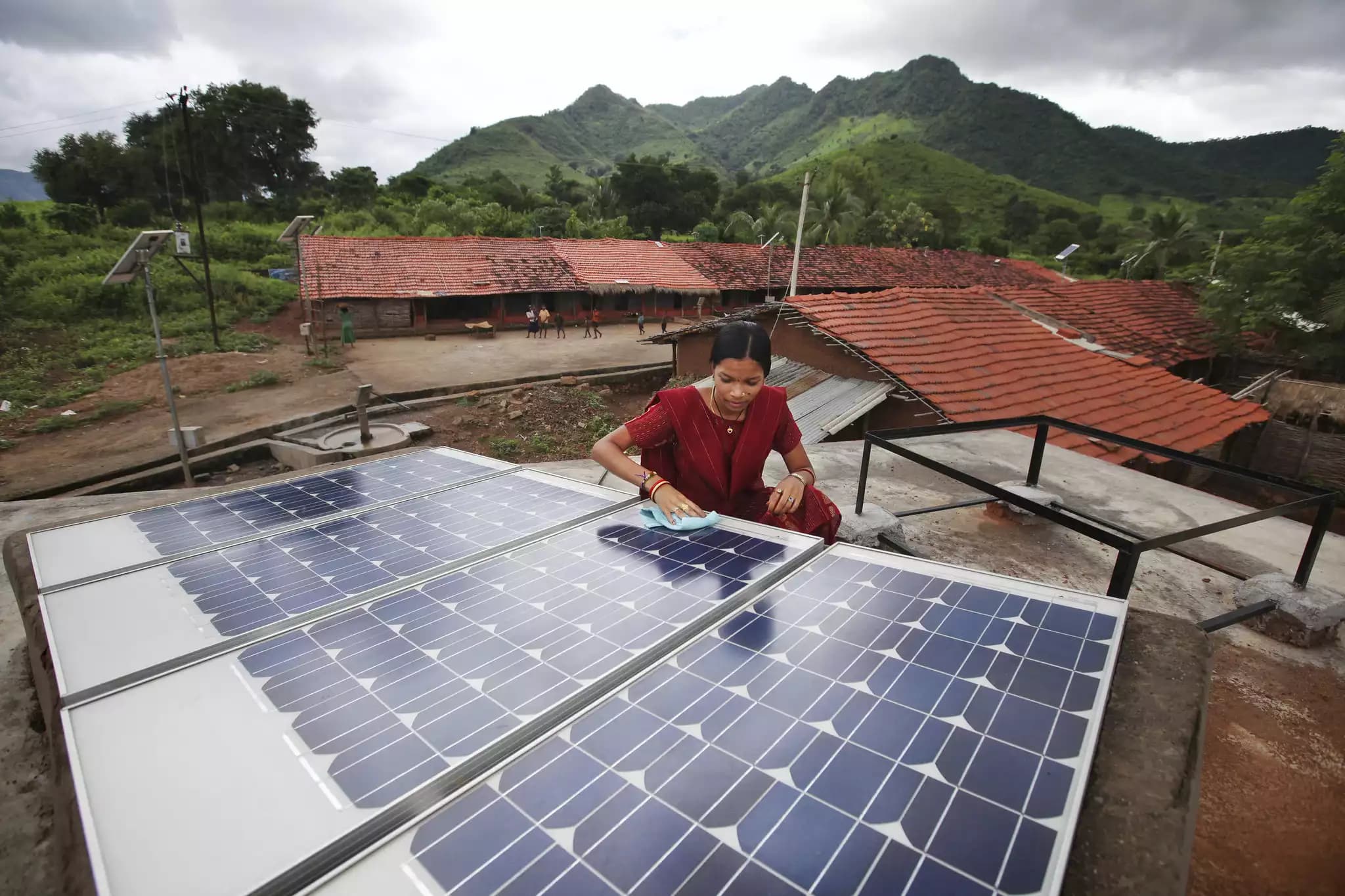
Image: UK Department for International Development
Energy challenges in rural areas are always complex and multidimensional. These complexities extend beyond geographic barriers to the state's political will to meet rural communities' energy needs.
This situation further compounds the persistent challenges to rural energy security. According to the latest data from the Ministry of Energy and Mineral Resources (ESDM), approximately 1.28 million households across the country still lacked access to electricity in 2025.
Many people have responded to electricity shortages through community-based energy independence initiatives. Rural communities have sought to convert their natural resources, particularly water, into electricity. One example is Andung Biru Village in Probolinggo, where the community has demonstrated that the lack of electricity is not a complex problem, but rather a catalyst for finding self-sufficient solutions.
The challenges of providing electricity to rural communities reflect the state's limitations in guaranteeing the basic rights of its citizens. This situation not only results in energy poverty but also impoverishes communities economically and socially. Without electricity, communities become isolated and experience limited interaction with one another.
Behind all this, a question arises: "Why do so many people, especially those living in remote villages, still not have access to electricity—a basic right to life?"
This question raises an important hypothesis: could it be that Indonesia's electricity sector has long suffered from poor governance?
Is energy monopoly the solution or the problem?
To guarantee public access to electricity, the government has adopted a monopoly approach through a single provider, PT PLN (State Electricity Company). In principle, this approach is justified if the underlying rationale is that access to energy is a fundamental right of citizens and therefore must be managed professionally by the state. However, this argument falls short when many people still lack access to state-provided electricity. This reflects a failure to properly implement this obligation.
The monopoly approach, implemented by PLN as a state-owned enterprise, has become irrelevant. This is compounded by the fact that PLN frequently cites limited access to remote villages and the cost-benefit calculations of providing electricity.
Reflecting on other countries, state monopolies no longer apply to electricity management. Instead, they prioritize electricity provision in an effort to ensure that energy is accessible to all.
Ecuador, for example, combines community participation and a state-led political approach in its energy governance efforts. Meanwhile, Nepal uses community-based micro-hydro management and donor support to expand electricity access in remote areas. In Germany, the energy transition (Energiewende) is supported by the development of citizen energy cooperatives that play an active role in the production and distribution of renewable electricity.
Hybrid Governance: Managing Energy Collectively
At this point, a hybrid approach to energy governance in national energy management, particularly electricity, needs to be tested. This governance model emphasizes that relying solely on a single actor, in this case the state, is no longer relevant for electricity provision. Interaction and initiatives from non-state actors are also crucial for reducing or even eliminating the number of villages without electricity.
Hybrid approaches are often discussed in technical energy issues, such as the integration of renewable and non-renewable energy. However, hybrid approaches represent a new idea that needs to be tested in terms of governance, not just the energy source. At this point, hybridity offers a more comprehensive solution that integrates the technical aspects of the energy source and its governance. This allows discussions on the energy transition to focus not only on the energy source but also on the governance of "new and renewable."
Andung Biru village: Energy powered by community
The question then is, "Is this hybrid discussion merely a discourse or has it already been put into practice on the ground?"
Andung Biru Village, located at the foot of Mount Argopuro in East Java, is a prime example of how remote and outermost villages consistently face the challenge of unequal access to energy, particularly electricity. Like many other remote villages, it encountered the classic arguments of the state-owned electricity company (PLN): difficult geographic access, limited infrastructure, and commercial considerations that deprioritize the provision of state-owned electricity. In the face of such situations, the lack of services creates space for adaptive local initiatives.
Through a community-based initiative, water resources were transformed into a micro-hydro power plant (PLTMH) that has been operating for over 30 years to date. It is managed by a community group known as the Tirta Pijar Group, and the equipment has been expanded through research and community service activities at various universities in Malang and Probolinggo. Furthermore, the sustainability of community initiatives has been further strengthened by several companies through their corporate social responsibility programs.
This configuration demonstrates that hybrid governance is not merely a concept, but a concrete practice embedded in the daily lives of the community. To borrow J.H. Boeke's term, the political-economic construction of society is always in a dualistic state—formal and informal. Similarly, in Andung Biru Village, the provision of electricity demonstrates an informal community response that collaborates with formal organizations, such as companies and universities.
As a result, rural energy governance is taking shape outside the state electricity system through hybrid initiatives from various actors in response to the unequal access that the state is obliged to provide.
The need for inclusive governance
Community-led initiatives like the one in Andung Biru demonstrate that a just energy transition cannot rely solely on infrastructure expansion but requires inclusive governance. Hybrid governance is an inclusive approach that allows for community involvement as key actors.
The implication is that the state needs to shift from a dominant role to a facilitator, strengthening community capacity to recognize grassroots initiatives. Otherwise, the energy transition risks reinforcing old inequalities. With a hybrid approach, rural energy can become a more participatory, adaptive, and inclusive arena for collective learning.
---
Mohammad Farid Budiono is a researcher and Assistant of the Department of Social Development and Welfare (PSdK), FISIPOL UGM.