Breaking the Cycle of Ignorance: Why Energy Literacy Is Key to a Just Transition
Francisco S.S • Author
12 August 2026

46
• 7 Minutes Read
Kang Maman99/Wikimedia Commons
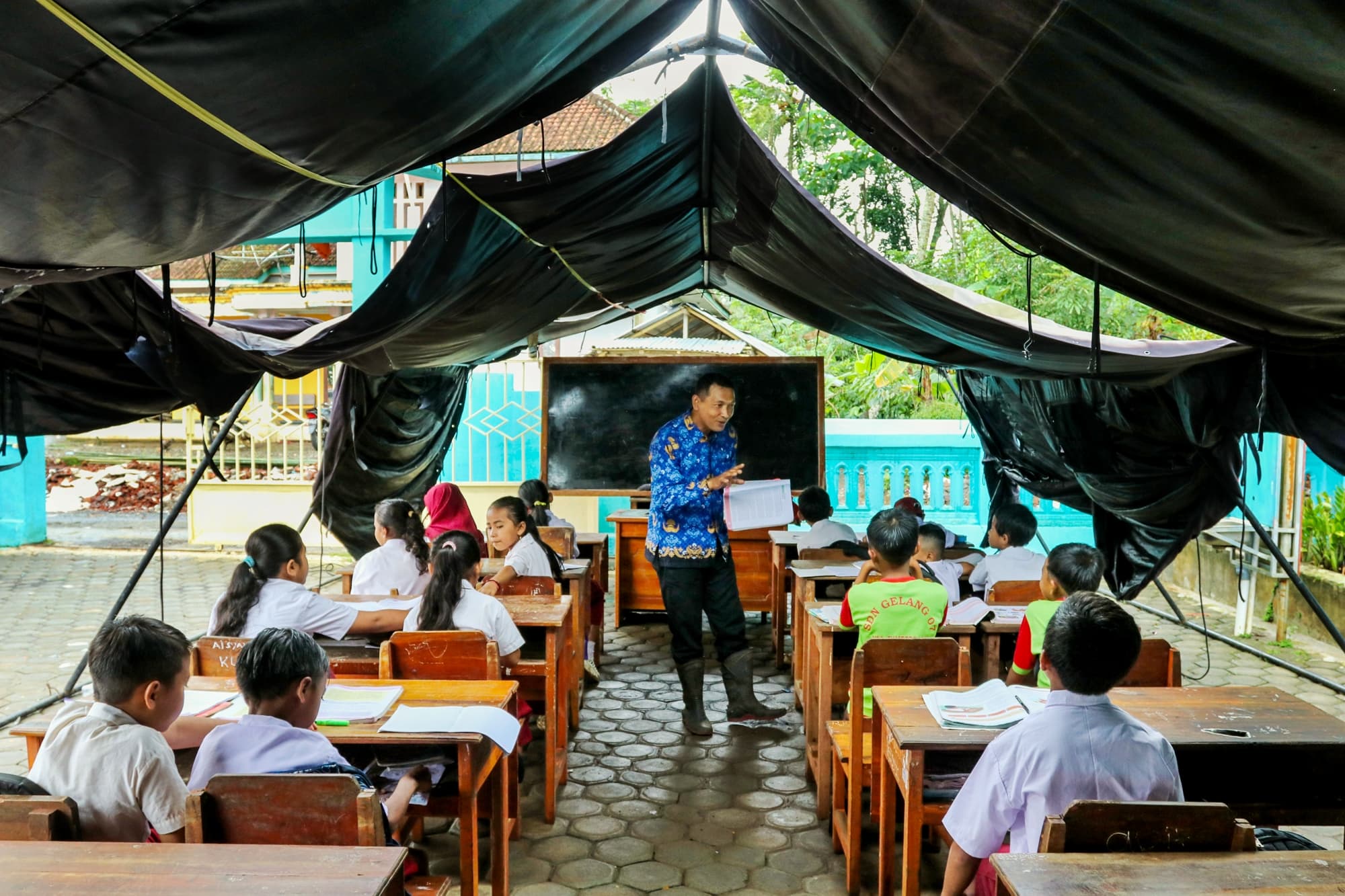
As an English teacher for Grade 12 high school students, I use the Pathway to English textbook, which aligns with the implemented curriculum, the Kurikulum Merdeka . The reading texts in Chapter 1, "Let’s Embrace Renewable Energy," and Chapter 4, "Zero Carbon Footprint," directly address Net Zero Emissions and the energy transition. Students can easily translate terms found in the book, such as “coal” and “renewable”.
However, when I asked, "What does coal actually look like?" or "How does coal affect your household electricity bills and your uncles' jobs at the mine?", the classroom instantly buzzed with murmurs. It was evident that the students were familiar with the terms but did not yet grasp their meaning or their real impact on daily life.
The whispers and hushed comments in that classroom offer a simple illustration of a major issue facing our nation today: the information gap. We are rushing toward an energy transition—a massive shift from fossil fuels to renewable energy to save the Earth. Yet, amidst the clamor of global commitments and investment values reaching trillions of rupiah, one crucial element is often overlooked: public literacy.
As an educator, I observe that without strong energy literacy, the term "just" in the context of the energy transition is merely empty jargon—sounding appealing in policy documents yet leaving a bitter taste at the grassroots level.
The jargon trap and information exclusion
A major issue regarding Indonesia's energy transition is the use of "high-level language." Policies are often communicated using technical and bureaucratic jargon, as well as exclusive foreign terms.
Take, for instance, terms like the Just Energy Transition Partnership (JETP), decarbonization, or the early retirement of coal plants. It is not just students familiar with English vocabulary who find these terms baffling; for rural farmers or factory workers, they sound entirely foreign—like incantations with no direct connection to the food on their plates.
The public's inability to grasp this narrative creates procedural injustice. How can we expect meaningful public participation if the public itself does not understand the nature of the transition?
In the realm of education, we are familiar with the concept of "comprehensible input"—the idea that information can only be processed if it is understood. When information regarding the energy transition circulates solely among Jakarta’s elites or foreign investors, the affected communities are positioned merely as objects rather than active subjects. It is as if they are compelled to accept change without truly grasping its logical consequences.
Literacy as the foundation of Justice
Why is energy literacy key? Because justice requires oversight, and oversight requires understanding. A just energy transition demands that the burdens and benefits of this transformation be distributed equitably.
Without literacy, communities would not know they have the right to demand social protection when jobs in the fossil fuel sector disappear. Nor would they realize that the land hosting large-scale solar panels should provide direct economic benefits to the local community, rather than simply serving as a new view seen from behind a wire fence.
As an English teacher, I often teach critical thinking skills to students through text analysis. Based on the classification of cognitive levels by Anderson and Krathwohl (2001), critical thinking falls under the category of Higher-Order Thinking Skills (HOTS).
I view the ability to question narratives as the highest form of literacy. In the context of the energy transition, literacy means empowering citizens to ask: "Who is funding this project? Is this debt that will burden our future taxes? Is the nickel mined for these electric vehicle batteries destroying forests across the Indonesian archipelago?"
Energy literacy transforms society from mere electricity consumers into energy citizens. Energy-literate citizens have the capacity to organize themselves—for instance, through village-level solar energy cooperatives like the Merah Putih Village Cooperative, or simply by consciously practicing energy efficiency in their own households. This is the essence of energy democratization.
The classroom irony
Ironically, our education system is still struggling to respond effectively to this transformation. Our curricula often lag behind the urgency of current issues. Topics such as climate change and the energy transition are frequently merely touched upon in Geography or Biology lessons, and treated simply as material to be memorized.
In the English classes I teach, I strive to break through these boundaries. Language is not merely a tool for communication but also a means of advocacy. When I ask students to debate the pros and cons of shutting down coal-fired power plants in English, I am actually training them to have the courage to voice their opinions on the global stage.
However, the efforts of just one or two teachers are not enough. We need a systemic literacy movement that integrates energy issues across various disciplines. Education must be capable of preparing students not merely to become future workers, but to become individuals who can navigate climate change with their heads held high.
Toward a solution: recommendations
To break this cycle of ignorance, concrete steps involving various levels are required.
The first step is to redesign policy communication. Governments and international institutions must not simply release documents spanning hundreds of pages written in technical English. Narratives need to be translated into local languages and everyday language, and accompanied by visualizations that are easily understood by the general public. Transparency is not merely about providing data, but ensuring that the data is comprehensible to everyone.
Secondly, schools must serve as hubs for literacy. Schools—particularly at the secondary level—need to become centers of information on energy for the community. Teachers must be equipped with the skills to teach the topic of energy transition through an interdisciplinary approach. Imagine a mathematics lesson utilizing local emissions statistics, or an Indonesian language class assigning students to write advocacy letters to council members regarding environmental policy.
Third, the involvement of local communities in that narrative. A just transition must respect local knowledge. Literacy is not merely about educating the public; it is also about listening to them. Indigenous communities often possess their own methods for managing energy and natural resources that are far more sustainable than the solutions offered by large corporations.
Closing
The energy transition is a long journey that cannot be undertaken solely by relying on a handful of experts and technocrats formulating policies in air-conditioned rooms. It is a journey for all the people of Indonesia. If we continue to leave the public in the dark regarding information, we are effectively laying the foundation for a new form of injustice.
As a teacher, I dream of a day when, upon being presented with a text about the energy transition, students will no longer ask what it means, but instead say: "We know what we must do to protect our future."
Breaking the chain of ignorance is the first step toward ensuring that when clean-energy-powered lights turn on, they do not merely illuminate major cities but also cast the light of justice across every corner of the nation. Ultimately, the most crucial transition is not one of machinery, but of mindset.
—
Fransisco is an English teacher at St. Paulus High School in Jakarta.