Renewable Energy in Rural Areas: What’s Holding It Back?
Bram Setiawan • Author
20 July 2026

82
• 5 Minutes Read
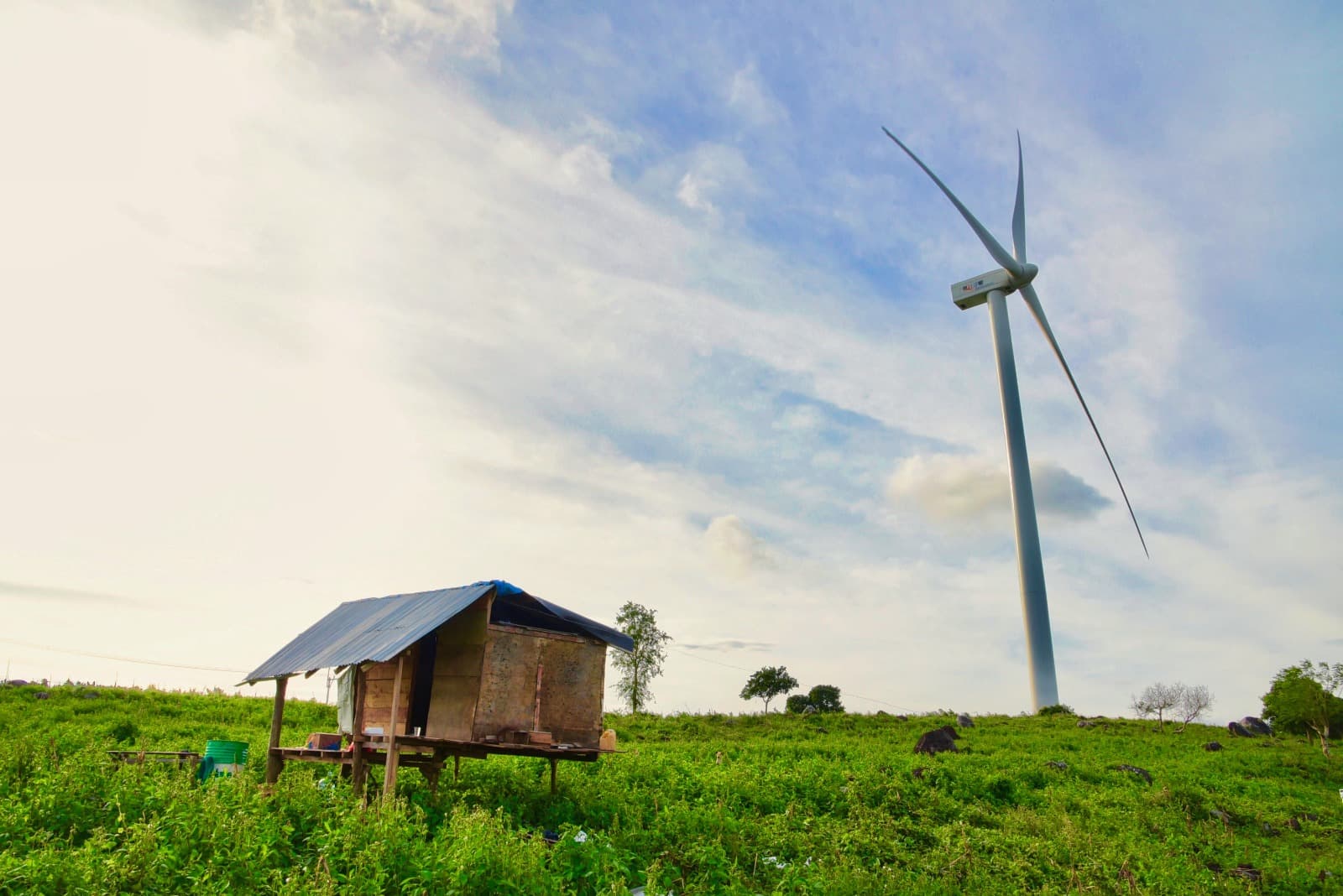
Indonesia has abundant renewable energy potential for development in rural areas, such as solar, hydropower, biomass, and wind. However, utilization remains low.
For example, analysis by the Center for Economic and Legal Studies (CELIOS) based on Village Potential (PODES) data from 2021 and 2024 shows a decline in community-scale hydropower installations, both pico- and micro-hydropower.
While the number of villages using solar energy appears significant, this figure is still disproportionate to the total number of villages in Indonesia. Of the 84,276 villages in Indonesia, only 30,476 (36.16%) have utilized solar energy, but only for public street lighting.
Rural areas are not short of energy resources
Each village has diverse energy potential, whether located in coastal or mountainous areas. This widespread energy potential can actually be a community-scale advantage, compared to coal or gas, which are limited to specific areas and must be transported to large power plants.
Community-based energy sources are produced close to the point of consumption, eliminating the need for large-scale electricity transmission from power plants hundreds or even thousands of kilometers away. This model also empowers communities to play a role as managers and beneficiaries of renewable energy development, rather than simply being consumers of electricity.
The biggest challenge lies in transforming sustainable energy use into a stable energy supply system. According to CELIOS, 94.63% of villages in Indonesia still lack renewable energy development programs. Therefore, even though villages have adequate renewable energy sources, institutional and policy support remains limited.
The development of renewable energy in rural Indonesia shows contrasting trends between 2021 and 2024. While the number of villages using solar energy for public street lighting increased from 24,766 to 30,476—representing a growth of about 23.1%—the number of families using solar energy decreased from 4,176 to 3,076, representing a decline of about 26.3%.
According to the report Great Potential, Welfare Lagging Behind: Structural and Regulatory Gaps in the Rural Renewable Energy Transition, the decline is related to limited access to rooftop solar power plant (PLTS) ownership, inadequate net-metering schemes, and a lack of risk-reduction instruments that would expand access to this technology for low- and middle-income communities.
Meanwhile, the number of household biogas installations decreased from 749 in 2021 to 601 in 2024, a decline of approximately 19.8%. This occurred despite the Central Statistics Agency (BPS) recording an increase in the number of livestock farmers and a rise in the livestock population. This situation highlights the need for interventions through the establishment of farmer-owned businesses and financial support in the form of grants and subsidies for the construction of government-owned biogas facilities (reactors).
The use of hydropower for electricity generation also decreased from 4,565 to 4,102 villages, or approximately 10.1%. The lack of growth and stagnant development of community-based hydropower generation is believed to be due to the long-term power purchase agreement (PPA) mechanism with PLN, which has not prioritized community-based projects.
The difficult path to unlocking the potential
The need to expand local community-based energy systems is increasingly urgent, especially given recent disruptions to the electricity system. The total blackout in Sumatra and the rolling power outages in Java and Kalimantan demonstrate that large generating capacity does not necessarily mean a resilient system.
The devastating impact of power outages extends beyond darkness to significant economic losses. Various economic activities are immediately disrupted due to operational issues that depend on electricity to support production. Micro, small, and medium enterprises (MSMEs) also suffer significant losses, particularly food and beverage vendors and catering business owners. This phenomenon reinforces the view that electricity is not just a commodity, but a basic necessity that supports all aspects of life.
Therefore, Indonesia needs to make greater use of local energy sources. Furthermore, community-based renewable energy development has the potential to generate economic value. Unfortunately, renewable energy development in rural areas is hampered by barriers to funding, institutional capacity, and policy support.
Accelerating the energy transition in rural areas requires more than simply increasing the number of projects or generating capacity. The government needs to ensure program sustainability, expand community access to funding, reform regulations that continue to encourage community initiatives, and position villages as key actors, not simply development sites.
The challenge is that access to various financing schemes still faces numerous barriers. Community-based energy financing remains fragmented across various sources, including government budgets, village funds, corporate social responsibility (CSR), philanthropy, and international funding. Furthermore, available financing mechanisms are typically designed for large-scale projects, while community groups still face limitations in institutional capacity, administrative requirements, and management. As a result, many initiatives continue to rely on grants and lack sustainable financing mechanisms.
Therefore, strengthening coordination across various funding sources and collaboration between stakeholders is necessary. Similarly, collaboration between the government, financial institutions, the private sector, philanthropy, and the community is essential to ensure the sustainable development of community-based renewable energy. The government can rely on village-based business units, such as village-owned enterprises (BUMDes) and the Merah Putih Village Cooperative, to promote community-based electricity generation efforts.
Ultimately, shared prosperity, including the benefits of the energy transition, needs to be defined as a condition in which local communities are guaranteed involvement in determining the direction of development. They should receive economic benefits, participate in decision-making processes, and have rights over energy projects.