Green Energy Boosts Economy, Yet Markets Doubt The Government’s Commitment
Duwi Setiya Ariyanti • Author
19 June 2026

72
• 5 Minutes Read
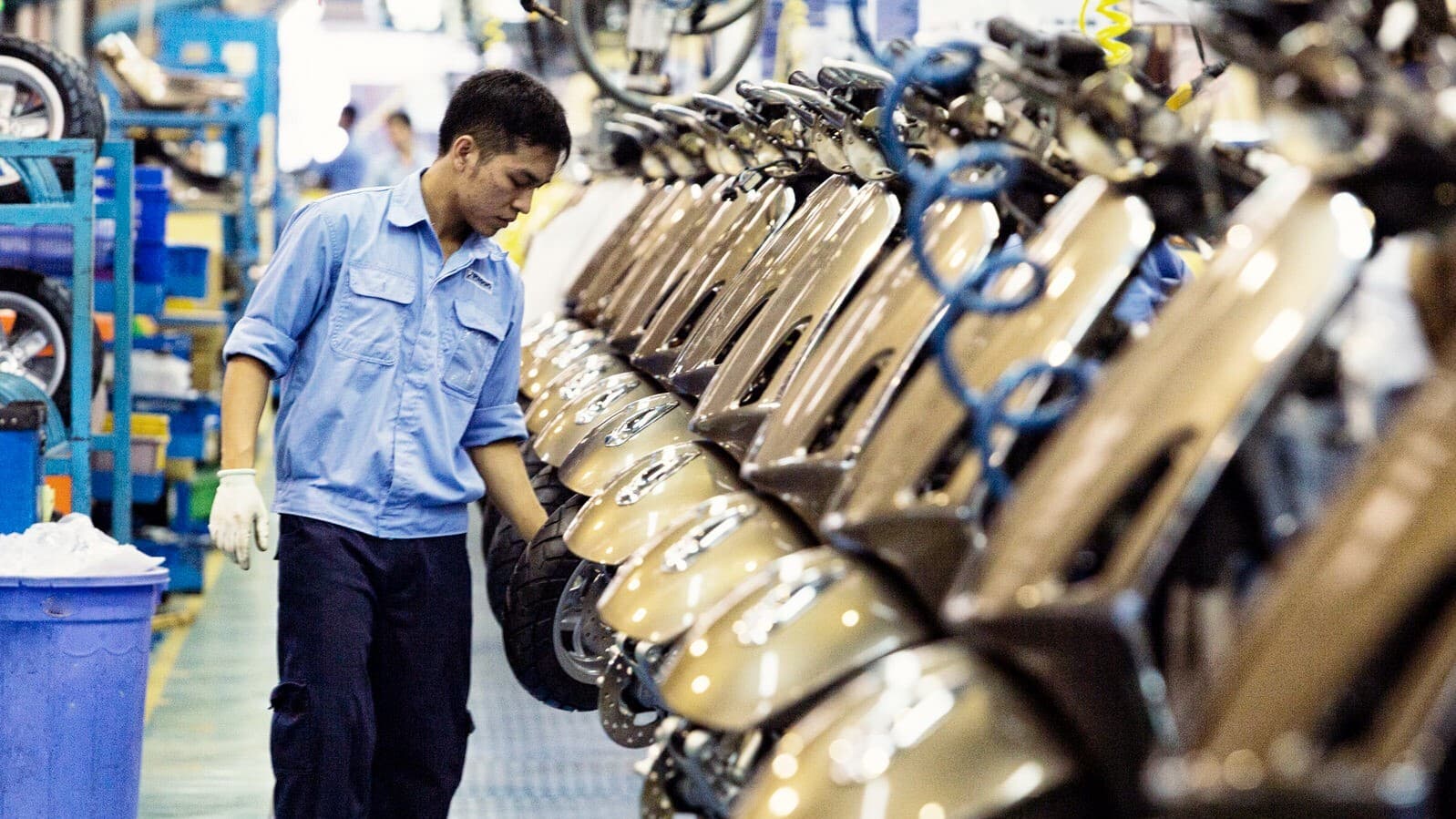
Image: Francois Carlet-Soulages / NOI Pictures
As part of the Asta Cita (The Eight Aspirations) agenda, the development of green industries has been one of the key priorities of the Prabowo Subianto administration. In line with this objective, the government is committed to continuously updating its actions towards the industrial decarbonization roadmap.
The Industrial Decarbonization Roadmap was developed by the Ministry of Industry in collaboration with the World Resources Institute (WRI) Indonesia and the Institute for Essential Services Reform (IESR) and was subsequently launched in 2025. This policy is a crucial part in the 8% annual economic growth target. This roadmap also serves as a reference for greenhouse gas (GHG) emission reduction targets for industrial players as well as the basis for mobilizing green investment and ensuring the provision of energy and low-carbon materials.
In addition to supporting economic growth, the roadmap is projected to reduce emissions by up to 289.7 million tons of carbon dioxide (CO2), enabling the industrial sector to achieve net zero emissions (NZE) by 2050. This target is 10 years earlier than previously planned.
Another impact of industrial decarbonization is reflected in the increase in gross domestic product (GDP). This stems from improvements in environmental and economic carrying capacity. Estimates for 2025 indicate that low-carbon economic practices could result in an average GDP increase of up to 5.11% by 2060.
Green industry requires support
Green industry prioritizes the efficient and effective use of resources in a sustainable manner throughout its production processes.
Industries that use resources efficiently and effectively can create products that are better both environmentally and economically. As a result, these industries are able to balance development and environmental sustainability while simultaneously providing benefits to society.
It is therefore unsurprising that amidst environmental degradation and the declining of Earth’s carrying capacity, a green industrial transition is crucial. According to a WRI publication dated August 22, 2025, the industrial sector contributed 18.9% to GDP and employed more than 19.3 million workers. At the same time, industrial activity contributed 34% to total national emissions.
The government has identified four key pillars driving the development of the green industry. First, there is increasing global market demand for carbon footprint transparency. The government also recognizes there is momentum for the growth of green financing as financial institutions focus on projects that align with environmental, social, and governance (ESG) aspects.
Next, the government provides fiscal incentives supported by regulatory frameworks and strategic roadmaps to encourage industry players to increase efficiency and decarbonize. Finally, industrial decarbonization aligns with the broader Asta Cita framework, encompassing a green economy, green job creation, and value-added industrialization.
Actions remains misaligned with targets
Unfortunately, the development of the Industrial Decarbonization Roadmap is insufficient. There remains a noticeable gap between planning and implementation, for example in terms of supporting infrastructure. In the context of electrification, for example, business players are skeptical of the government's initiative to expand the base of green energy sources, due to the ongoing projection of coal use in PT PLN (Persero)'s 2025-2034 Electricity Supply Business Plan (RUPTL) through 2059. Coal consumption is reflected in the projected additional capacity of coal-fired power plants (PLTU) of up to 6.3 gigawatts (GW) over the next decade.
As a result, a survey of business people by Third Generation Environmentalism (E3G), We Mean Business Coalition, and the Global Renewables Alliance in a study titled “Powering Up: Business Perspectives on Electrification” found that 64% of executives believe governments are underinvesting in the electricity grid, making it the most significant challenge in the low-carbon industry.
Moreover, 65% of business leaders believe that Indonesia risks falling behind in the global electrification race. In response to this risk, 78% of respondents considered relocating their business operations, and 68% continued investing in renewable energy-based electricity.
The willingness of businesses to invest substantial capital to renewable electricity development may even outpace the government's preparedness. At least 83% of business leaders are moving toward electrification faster than the government's infrastructure can keep up. Consequently, 55% of executives are calling for clear long-term policies, expansion and digitalization of the electricity transmission grid, and faster planning.
The poll was conducted in 18 countries, encompassing both developed and developing nations, and gathered responses from 1,994 business leaders. Notably 88% of respondents prioritized electric equipment over fossil fuel-based alternatives to boost business competitiveness in the next decade. Consequently, 91% of executives plan to implement green electrification by 2030 amidst the growing concerns of energy security and economic resilience.
The government should support businesses that are seeking to transition to lower emissions. For example, for businesses located in industrial areas or special economic zones, the government could establish renewable energy zones (REZs) to serve as low-emission energy supply centers.
Outside the designated areas, the government can leverage PLN's transmission network to provide businesses with renewable energy from trusted sources. This can be achieved through the implementation of transparent and mutually beneficial toll fees to both businesses and PLN. This scheme could generate additional revenue for PLN to finance electricity network expansion to meet industrial needs.
Finally, the development of Renewable Energy Zones and the business-PLN partnership model must be accompanied by government support for increasing renewable energy capacity and reducing dependence on fossil fuel. Without these two measures, the market will continue to doubt Indonesia's commitment to achieving a low-carbon economy.