How an Unjust Energy Transition Puts Jobs at Risk
Robby Irfany Maqoma • Author
10 August 2026

48
• 7 Minutes Read
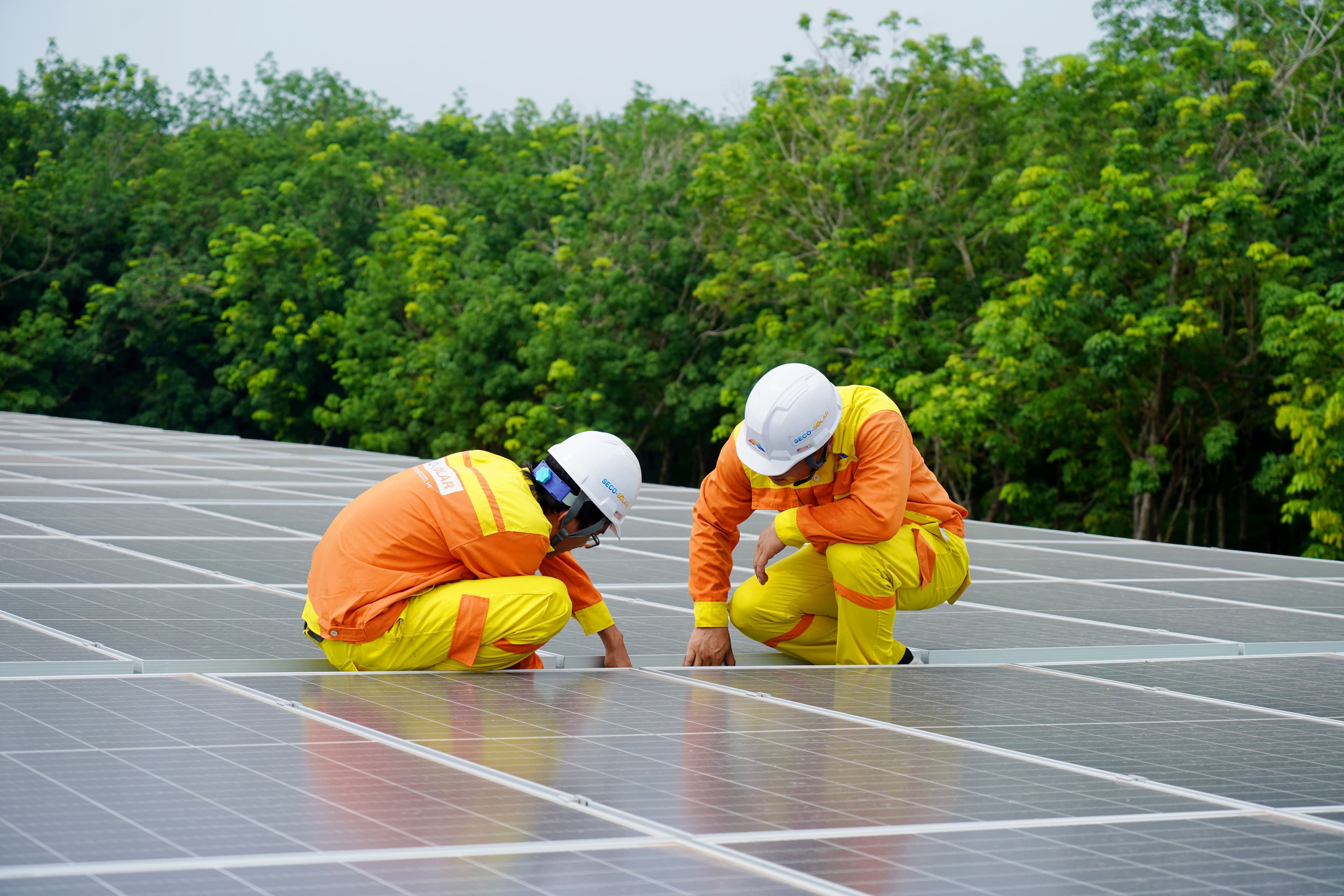
Last year, the Ministry of National Development Planning (Bappenas) published the Indonesian Green Workforce Development Roadmap, which optimistically projected the future of green jobs. Green jobs are those that directly contribute to environmental conservation, energy efficiency, carbon emission reduction, and ecosystem protection. These jobs include organic farmers, renewable energy power plant technicians, and carbon trading analysts.
Bappenas estimates that there will be 72 million green jobs by 2029, up from 56 million in 2025. Green sector employment is also projected to increase from 4 million to 5.3 million over the same period. This increase will occur under a high economic growth scenario and Indonesia's optimistic decarbonization plan, including renewable energy development.
However, it's important to note that this document still focuses on the potential for green jobs and employment. The Bappenas roadmap does not map out the risks of job losses in non-green sectors, as trade-offs are highly likely in the energy transition. Workers such as coal miners, barge drivers, and ship crews, among others, are at risk of losing their jobs as Indonesia moves away from fossil fuels.
Without proper planning from the outset, the energy transition, which should be a blessing for Indonesia, could instead bring dire consequences for many people.
Disruption caused by the transition
A study by Pham et al. (2026) published in the Journal of International Economics and Management identifies Indonesia as the country with the most striking case of the relationship between renewable energy consumption and unemployment in the middle-income Asian region.
The study found that a 1% increase in renewable energy consumption in Indonesia was associated with a 0.124% increase in unemployment. This figure can be seen even in the short term, or at least one year. Indonesia also experienced the highest impact compared to the 12 other countries studied, from Bangladesh to Türkiye.
These findings are consistent with research published by Sumanto et al. (2020). The study found that technological development in Indonesia actually hinders job creation, with a 1% increase in technological development (a key aspect of the energy transition) associated with a 1.11568% increase in unemployment. However, the impact on unemployment varies across regions.
Why is Indonesia Vulnerable?
Pham et al.'s study links Indonesia's vulnerability to three structural factors. First, its high dependence on fossil fuels. Indonesia is both a major consumer and producer of fossil fuels. Coal is projected to be the most widely used energy source for electricity generation until at least 2050.
This dependency complicates the transition process, requiring a restructuring of the workforce from the established fossil fuel sector to the renewable energy sector, which demands different skills. East Kalimantan, one of the largest coal-producing regions, alone has a formal workforce of 211,000.
The second factor relates to the skills mismatch. Workers accustomed to working in the fossil fuel sector don't necessarily possess the competencies required by the renewable energy industry. Consequently, the process of absorbing new workers takes time for capacity building (upskilling) or retraining (reskilling). The third factor is Indonesia's inadequate training system to quickly bridge this gap.
Other variables also exacerbate the situation. For example, increased foreign direct investment (FDI) in Indonesia is actually associated with higher unemployment. This pattern contradicts claims by many state elites that investment can create jobs.
Why does this happen? FDI typically flows into capital-intensive and technology-based sectors that require more skilled labor. Meanwhile, the majority of Indonesia's workforce still has low to medium skills. International Labour Organization (ILO) data shows that approximately two-thirds of workers in Southeast Asia have medium skills. Consequently, without an adequate training system, increased FDI risks displacing jobs rather than creating them.
One example of the negative impact of FDI on labor is seen in the Kayan hydroelectric power plant development in North Kalimantan. The company pledged to employ 80% local workers. However, the reality was the opposite: only about a fifth of the workers were local residents.
Meanwhile, most manual laborers were imported from abroad. Those who were successfully recruited worked without health insurance, on six-month contracts through third-party vendors. Furthermore, their working hours far exceeded labor law requirements. The recruitment process itself was also marred by allegations of discrimination: only residents with letters of recommendation from traditional leaders were eligible for work. As a result, residents who criticized the project were marginalized from the job market before their very eyes.
Informal workers at greater risk
Indonesia also faces a high risk of unemployment due to the larger proportion of informal workers compared to formal workers (57.8% of the total workforce). Jobs such as scavengers, grocery store managers, and small-scale farmers and fishermen are among the informal jobs vulnerable to loss due to changes in government policy.
A vulnerability mapping study published by the Tifa Foundation and YAPPIKA documented how energy development efforts that failed to incorporate community aspirations have negatively impacted local livelihoods. For example, farmers near the Rantau Dedap Geothermal Power Plant in South Sumatra reported a 40% drop in crop yields after passing project trucks kicked up dust that settled on coffee flowers, causing them to fall off before they could bear fruit.
As harvest yields declined, seasonal employment for farm laborers also dwindled. Some residents began considering migrating out of the village in search of work.
A different case is taking place in Makassar. In the capital of South Sulawesi, the Tamalanrea Waste-to-Energy Power Plant (PLTSa) project threatens thousands of scavengers, informal workers who rely on waste for their livelihood. The same waste will be converted into fuel for the power plant. Worse still, this risk could spread nationwide, as Danantara plans to build 33 waste-to-energy power plants across Indonesia.
Community-based planning
Indonesia does have a labor roadmap to anticipate the high demand for workers in environmentally friendly sectors. The document outlines action plans, ranging from expanding the curriculum in vocational and professional schools to implementing sustainable business practices in companies. This responsibility is shared by various sectors, including educational institutions, various ministries and agencies, the private sector, and professional associations.
However, this roadmap does not fully reflect conditions in various regions because it does not include action plans for projects under development or being discontinued. For example, there is no detailed study of the closure of a coal-fired power plant (PLTU) in East Java along with its replacement renewable energy project, including an assessment of the impact on workers. Such mapping is needed to mitigate the risk of job losses not reflected in the policy.
This is where local governments must step in to map the potential risks arising from decarbonization projects down to the household level. Projections at the grassroots level cannot be done alone; they require collaboration with village/sub-district officials and local communities. Micro-level analyses must also include disaggregated data, separating job loss risks for vulnerable groups such as women, children, and the elderly.
Accelerating workforce risk mapping must be a government priority. This is especially true given President Prabowo Subianto's target of increasing solar energy capacity by 100 gigawatts (GW) in the next few years. Sooner or later, expanding solar energy capacity will reduce the contribution of fossil fuels such as coal and gas. Therefore, unemployment risk is not a long-term projection of the energy transition, but rather a short-term impact of government policies that must be identified and mitigated immediately.
A just energy transition is inseparable from the creation of equal employment opportunities for the community. Without risk mitigation that takes into account the smallest units in society, efforts to decarbonize the industrial sector, including energy, risk creating new disruptions, including future unemployment.