The World is Subsidizing Solar Energy. Why is Indonesia Doing the Opposite?
Bram Setiawan • Author
24 August 2026

69
• 8 Minutes Read
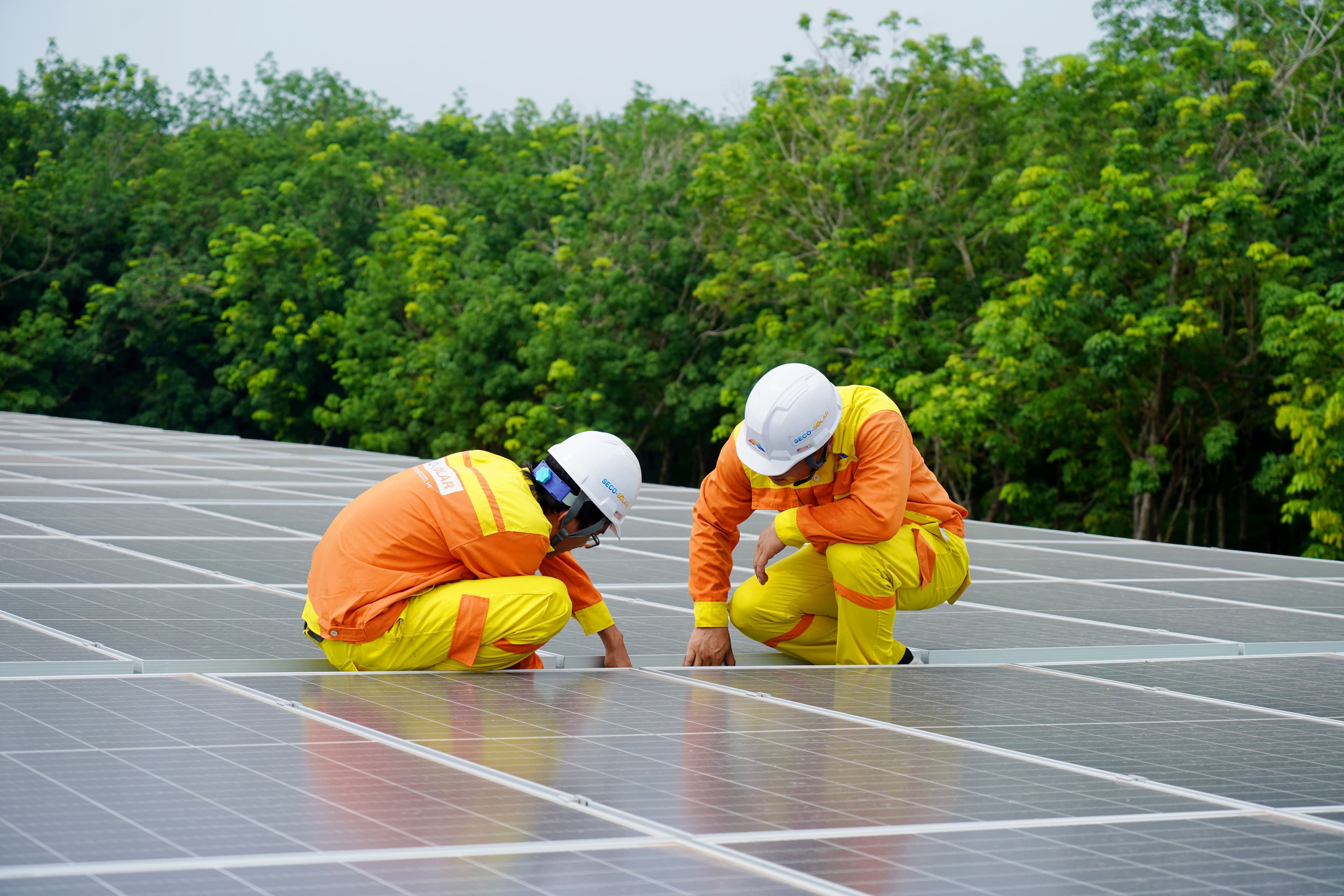
Solar energy can be considered the primary choice for expanding electricity generation capacity across various countries. Increasingly affordable technology costs and continuously rising production capabilities are driving the widespread adoption of solar power plants.
Solar energy has become a crucial part of efforts to expand the use of renewable energy. While countries may adopt different approaches to harnessing it, many have taken a similar path to accelerate solar energy development by providing support through incentives and subsidies.
1. Australia
The Australian government supports solar energy systems, whether grid-connected or off-grid. At the federal level, support is provided through the Small-scale Renewable Energy Scheme (SRES). This scheme is a government program offering incentives to households and small businesses to reduce the upfront costs of installing renewable energy systems.
Under this scheme, solar energy and battery installations qualify for Small-scale Technology Certificates (STCs). These certificates are government-issued financial incentives that act as a discount or rebate when purchasing solar panels or home batteries. The rebate value typically ranges from A$2,400 to A$4,000, depending on the system size and installation location.
At the state level, New South Wales offers interest-free loans of up to A$14,000. Queensland provides a rebate of A$3,000 for solar power systems and an additional A$3,000 for batteries. Meanwhile, the Australian Capital Territory (ACT) offers loans of up to A$15,000 for the installation of solar energy systems and batteries. Off-grid solar power systems remain eligible to receive STCs.
2. India
The Indian government provides an initial subsidy of up to 40% for rooftop solar PV systems through a program run by the Ministry of New and Renewable Energy. Several Indian states also offer additional incentives; for instance, Delhi provides an extra rebate of INR 10,000 per kilowatt (kW) for the installation of these solar energy systems. Additionally, the government offers accelerated depreciation benefits on solar energy system assets for the commercial sector.
The World Bank is supporting rooftop solar power programs to expand access to clean energy while fostering job creation and private investment. This support aligns with India's goal of achieving net-zero emissions by 2070 and increasing the share of non-fossil energy sources in its electricity mix to 60 percent by 2035. Despite the growth of large-scale solar power projects, the adoption of solar energy in the residential sector remains limited.
The Government of India has launched the PM Surya Ghar: Muft Bijli Yojana program, which aims to provide incentives for the installation of rooftop solar power systems for 10 million households in urban and rural areas. The program is designed to boost the development of the local industry manufacturing rooftop solar equipment, in addition to the goal of reducing household electricity costs.
The World Bank funding package comprises an $820 million loan from the International Bank for Reconstruction and Development (IBRD), a $60 million concessional loan from the Clean Technology Fund, and a $10 million grant from the IBRD’s Livable Planet Fund.
The World Bank will also mobilize US$4.2 billion in commercial loans to support the installation of rooftop solar power systems for households. The program also includes unsecured financing for households.
3. Europe
In several European countries, governments provide various incentives to encourage the use of solar energy, ranging from value-added tax (VAT) exemptions and tax reductions to low-interest loans.
In Germany, solar energy installations are exempt from VAT or subject to a zero-percent rate. The government also provides low-interest loans through KfW, the development and investment bank, for the purchase of solar panels and batteries. Household self-consumption systems with a capacity of less than 30 kW are not subject to additional charges.
In the UK, the installation of solar power and battery systems is exempt from VAT until at least 2027. Homeowners can also sell excess electricity generated through the Smart Export Guarantee (SEG) scheme.
Italy has an "Ecobonus" scheme that provides incentives through a 50% income tax reduction over 10 years for the installation of rooftop solar PV systems and batteries. Italy also employs a *scambio sul posto* mechanism—similar to net metering—whereby excess electricity is fed into the grid in exchange for compensation.
The Spanish government has applied a zero percent VAT rate to residential solar energy systems since 2022. A net billing mechanism is in place to compensate system owners for excess electricity fed into the grid. The government also provides support for battery adoption through a program known as MOVES III.
The French government offers a 15% tax credit for solar energy system upgrades, capped at €600. It also provides interest-free loans of up to €30,000 for solar energy systems through the Eco-PTZ scheme.
Small-scale grants for solar energy development in rural areas are available in Sweden and Norway.
4. China
China has indeed reduced renewable energy subsidies amidst the rapid growth of solar and wind power generation. In 2025, the Chinese government adjusted its policies to bring solar and wind projects under a market-based pricing mechanism. Nevertheless, the country has long been driving efforts toward an energy transition.
China began implementing its Renewable Energy Law in 2005. Since then, the country has ramped up the development of solar and wind energy. By the end of 2025, the installed capacity of these two renewable energy sources is set to reach 1,840 gigawatts (GW), comprising 1,200 GW of solar and 640 GW of wind capacity, according to the National Energy Administration.
The Chinese government also implemented a solar panel program to alleviate poverty in rural areas, including the installation of rooftop solar power systems on the homes of low-income residents, which was expanded starting in 2014 and subsequently aligned with the 2020 poverty alleviation goals.
The Photovoltaic Poverty Alleviation Program (PPAP) is a pioneering policy innovation that implements a model allowing households to sell surplus electricity to the national grid at a subsidized rate. This model directly increases households' disposable income.
China has also been the world's largest solar and wind energy market for years, having established the most comprehensive industrial chain. It also ranks at the top in the production and export of products such as solar panels, wind turbines, and inverters. China controls approximately 80%–95% of global manufacturing capacity across various segments of the solar industry supply chain.
How about Indonesia?
Amid the global trend of solar energy adoption, Indonesia certainly does not lack ambition. President Prabowo Subianto has boldly announced a target to develop up to 100 GW of solar power capacity.
However, simply increasing generation capacity is insufficient to meet that ambitious goal. The program should serve as a catalyst for promoting a decentralized electricity system. Solar energy can be developed through standalone solar PV systems equipped with battery energy storage (BESS) in remote areas that have historically relied on diesel generators.
Experiences from various countries demonstrate that the growth of solar energy is not determined solely by the capacity to build power plants; it requires policies backed by consistent planning and implementation. However, in Indonesia, equitable access to rooftop solar power systems remains a challenge. The benefits of this technology are largely enjoyed by those with sufficient financial means, while low-income groups are hindered by high investment costs.
The Sustainable Energy Fund (SEF) grant program, a collaboration between the Ministry of Energy and Mineral Resources (ESDM) and the United Nations Development Programme (UNDP), operated only in 2022 and was not continued in the subsequent period. This rooftop solar panel grant has not fully reached communities in remote areas; out of a target of 1,296 customers, only 383 individuals had received the grant by December 2022, representing approximately 30% of the established target.
Regulatory changes eliminating the net metering scheme—a mechanism for exchanging electricity with PLN—have further complicated the situation. Previously, the old scheme allowed customers to feed excess electricity generated by rooftop solar power systems into the PLN grid and receive reductions on their electricity bills. This policy was established through the Regulation of the Minister of Energy and Mineral Resources (ESDM) Number 2 of 2024, which governs the use of rooftop solar power systems nationwide; this regulation supersedes ESDM Ministerial Regulation Number 26 of 2021. The removal of the scheme has reduced the economic incentives for installing rooftop solar power systems.
If this situation persists, Indonesia’s abundant solar energy potential will render even the grandest ambitions nothing more than empty rhetoric. However, examples from India and China demonstrate that policy plays a crucial role in expanding public access to solar energy—even down to the household level.