Prabowo’s Energy Self-Sufficiency Rhetoric: An Empty Slogan?
Robby Irfany Maqoma • Author
18 August 2026

40
• 6 Minutes Read
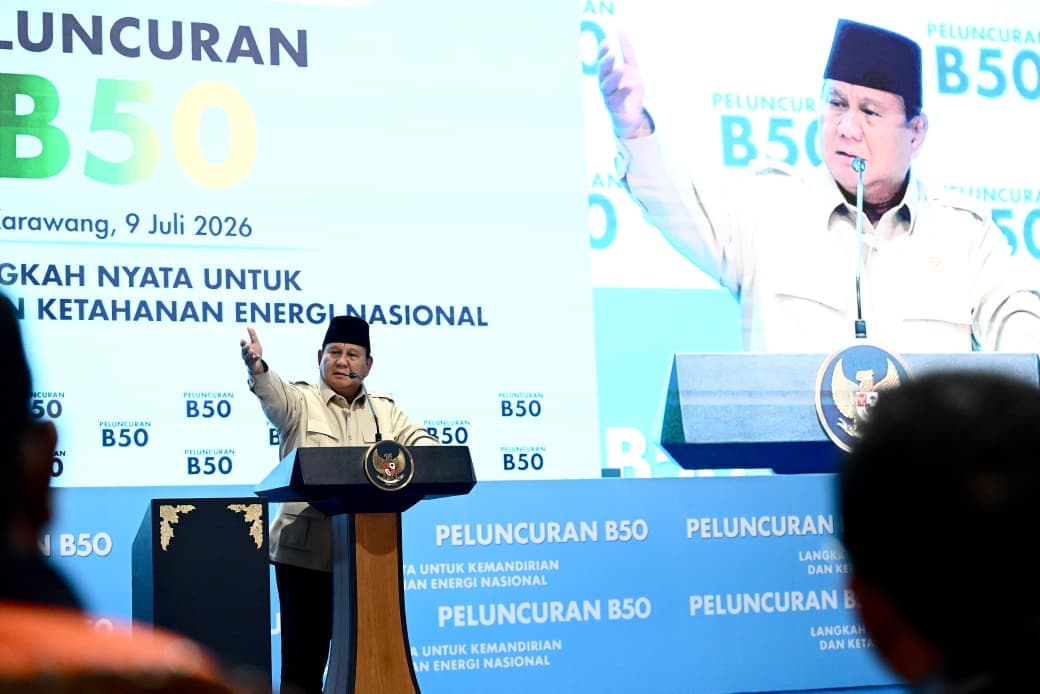
Over the past few months, social media has been abuzz with comments from netizens regarding President Prabowo Subianto's speeches, as he frequently touches upon the same recurring themes. One such topic is energy independence through domestic fuel production.
Prabowo has long called for energy self-sufficiency, dating back to his second presidential campaign in 2019. He has continued to reiterate the same narrative over the seven years since then.
This year, Prabowo also expressed similar views in his state address. He highlighted the achievement of self-sufficiency in diesel fuel, realized through a reduction in diesel consumption driven by the implementation of the B50 program, which resulted in foreign exchange savings of approximately IDR 170 trillion. The program which involves blending 50% biofuel (currently derived from palm oil) into diesel fuel was officially launched by the President late last July.
However, amid the government's repeated rhetoric and claims, is energy self-sufficiency truly the right approach to addressing Indonesia's energy challenges?
Fossil energy illusion
Indonesia's energy sector is in a tangled state due to a persistent reliance on fossil fuels. Beyond exacerbating environmental damage and draining public funds, the use of this "dirty" energy presents a paradox: even a nation with abundant fossil fuel resources can never truly be "self-reliant”, as commodity prices are determined by international markets.
Even the use of fossil fuel sources is not necessarily optimal, as it depends on governance—specifically, how the energy is extracted, transported, and ultimately sold to consumers.
Take coal, for instance. Currently, coal is a key Indonesian commodity and the primary energy source for the majority of power plants. Despite not relying on imports, the government has never truly been able to control where that coal is ultimately distributed.
For instance, the power grid in Java recently experienced a blackout partly triggered by a shortage of coal supplies. This is believed to have occurred because miners preferred selling to overseas markets, where prices were higher compared to the domestic market.
Furthermore, there is the issue of fuel. While the B50 policy could indeed significantly reduce or even entirely eliminate diesel imports, Indonesia cannot escape the reality that domestic crude oil production continues to decline, making increased imports inevitable.
The same logic applies to plans for bioethanol production, which has the potential to substitute for gasoline imports. Although touted as an eco-friendly "green gasoline," bioethanol projects have led to the clearing of tens of thousands of hectares of forest in Papua, displacing Indigenous communities and destroying the habitats of endemic wildlife. This is without even accounting for the associated greenhouse gas emissions, which ultimately exacerbate the climate crisis.
Is energy self-sufficiency possible?
If we view energy independence in terms of the balance between domestic supply and demand, it may well be achievable. However, the more important question is: how long can it be sustained?
As of 2024, Indonesia's coal reserves are estimated to be sufficient for the next 40 years. However, the majority (approximately 61%) consists of low-calorific coal, which is unsuitable for power generation due to its high moisture content. Consequently, relying on coal to achieve energy self-sufficiency may not be a viable strategy over the next 10 to 25 years. This challenge has even prompted PLN to initiate projects to modify coal-fired power plants so they can utilize low-calorific coal, despite the resulting lower combustion efficiency and higher emissions.
Energy independence is not merely a matter of ensuring sufficient domestic supply. Consider the cases of bioethanol and biodiesel, for instance: the use of 100% biofuel is not necessarily feasible for conventional vehicles, even if the entire supply is domestically sourced.
We must also consider the social and environmental impacts that the government and business sector have long dismissed as mere "externalities" of extractive activities. Large-scale coal combustion risks causing 156,000 premature deaths; meanwhile, the proliferation of abandoned mine pits claims the lives of children, and respiratory diseases afflict both the areas where extraction takes place and the major cities reliant on electricity from coal-fired power plants.
The path to renewable energy sufficiency
Energy self-sufficiency is entirely feasible if Indonesia commits its efforts to harnessing renewable energy sources. However, the old approach, extracting as much coal as possible or drilling for oil at extreme depths, is no longer relevant to the Earth's current situation.
Indonesia possesses abundant solar energy resources, with the potential to generate up to 190,000 terawatt-hours (TWh) of electricity. In fact, studies estimate that Indonesia could meet its entire energy demand through solar power. Numerous locations are suitable for installing solar panels, ranging from building rooftops to former mining sites.
Global renewable energy trends are increasingly favoring solar power. The levelized cost of electricity for solar energy is already lower than that of other fossil-based energy sources, assuming a comparison based on unsubsidized prices.
President Prabowo has set an ambitious target to increase solar power capacity by 100 GW. This goal deserves support, as substantial renewable energy capacity will pave the way for decarbonization across various sectors. With a supply of clean electricity, for instance, Indonesia could accelerate the mass adoption of electric vehicles while simultaneously ending the era of fossil-fuel-powered transportation. Furthermore, queues of citizens waiting to purchase subsidized LPG could become a thing of the past once the use of electric stoves becomes widespread.
Renewable energy paves the way for advanced green industrialization; for instance, it can drive the development of the low-carbon green hydrogen industry. Hydrogen can serve as an eco-friendly fuel or feedstock and act as a gateway to decarbonizing other sectors, such as agriculture and even heavy-duty transport.
Unfortunately, the current 100 GW program appears to be little more than a buzzword. To date, not a single document has been published to serve as a concrete planning basis for the initiative. Even in his state of the nation address last Friday, Prabowo made no specific mention of his plans regarding the energy transition—particularly concerning the expansion of renewable energy capacity, let alone green industrialization.
Without concrete planning documents, the 100 GW program risks becoming mere rhetoric. Such an ambitious plan requires robust system planning—for instance, by mapping out complementary energy sources like battery storage systems. Indonesia’s electricity system, which remains heavily reliant on large-scale coal-fired power plants, also needs to be transformed.
At the same time, achieving solar energy self-sufficiency requires a smooth process underpinned by ambitious and consistent policies to phase out fossil fuels. The renewable energy transition is inseparable from plans for the early retirement of power plants and the cancellation of new coal-fired power projects—along with the hundreds of trillions of rupiah in associated subsidies and incentives that have been in place for decades.